The abrupt revocation of access to proprietary models across international borders has forced a significant industry reckoning.¹ When frontier labs are ordered to pull advanced models like Anthropic's Mythos 5 and Fable 5 offline for foreign nationals in June 2026, even for a matter of weeks, the fragility of closed-source dependencies becomes painfully obvious.¹ Relying on a foreign API provider for the core reasoning engine of an enterprise is a single point of failure. When governments decide to execute a regulatory rug-pull like this, organizations quickly discover that the cloud is simply someone else's computer.
This weaponization of API access has triggered a response from the open-source engineering community. Developers are no longer always defaulting to the most expensive, heavily guarded proprietary models for every single task. The new paradigm is valuemaxxing.¹ Engineering teams are aggressively optimizing for the maximum possible intelligence yield per dollar spent1. This shift mandates complete freedom to self-host, fine-tune, and orchestrate large models on localized, sovereign infrastructure.
Two models have emerged, disrupting the established hierarchy of large language models. Moonshot AI shipped Kimi K3, a 2.8 trillion parameter multimodal model that currently holds the title of the largest open-weight model ever constructed3. Arriving slightly earlier in June, Zhipu AI released GLM-5.2, a 744 billion parameter agentic workhorse that immediately dominated highly competitive benchmarks and challenged the assumption that open-weight models cannot perform long-horizon reasoning tasks.¹ Both models boast a one-million-token context window.³ Both models utilize optimized Mixture-of-Experts architectures to keep inference costs viable.⁶ Both models perform at a level that severely threatens the dominance of closed proprietary systems like Claude Fable 5 and GPT-5.6 Sol.³
Operating a Canadian sovereign neocloud requires a fundamental understanding of the exact workloads that will saturate high-performance computing clusters over the next decade. We will be dissecting the architectural decisions, benchmark dominance, and raw deployment economics of Kimi K3 and GLM-5.2.
To comprehend why Kimi K3 and GLM-5.2 are causing such significant shockwaves, the current geopolitical and economic climate must be examined closely. The United States government briefly forced Anthropic to restrict access to its most capable models under Department of Commerce export controls, a suspension that ran from mid-June through the end of June 2026 before those controls were lifted and access was restored.¹ Simultaneously, OpenAI faced immense pressure regarding a limited release schedule for GPT-5.68. This weaponization of access shattered the illusion of a unified and borderless AI ecosystem.
Nations and international enterprises have awakened to the idea that depending on foreign cloud providers for critical AI infrastructure creates unacceptable geopolitical leverage. When a development team loses access to their primary codebase orchestrator overnight due to a foreign policy shift, entire product pipelines disintegrate.
Chinese AI labs recognized this vulnerability and executed their own geopolitical chess moves. By releasing highly capable models under permissive MIT licenses with zero regional locks, entities like Moonshot AI and Zhipu AI offer the global market a hopefully permanent insurance policy against API monopolization.¹
Furthermore, the tokenomics of the current market are fundamentally broken for large-scale agentic workflows. When autonomous agents require tens of thousands of reasoning tokens to execute a single iterative loop, paying five dollars per million input tokens to proprietary labs destroys unit economics.¹ GLM-5.2 operates at roughly one-sixth the cost of Claude Opus 4.81. Kimi K3 offers deeply discounted cached input pricing, dropping to a mere thirty cents per million tokens.³ The industry is aggressively pivoting toward self-hosted and sovereign deployments to escape this financial drain.
Hosting these models necessitates massive, localized, and highly secure compute infrastructure. Sovereign AI data centers are projected to become a 495 billion dollar market by 2035.¹⁰ Strict data localization laws and the absolute need to govern AI under domestic values drive this astronomical growth.¹⁰ Canada finds itself in a highly strategic position, particularly with the impending July 2026 CUSMA review creating both risk and opportunity for digital sovereignty.¹¹ Canadian cloud infrastructure, powered by abundant renewable energy and governed by strict data sovereignty laws, offers the exact environment required to host models like Kimi K3 and GLM-5.2 securely.¹¹

Moonshot AI completely bypassed incremental updates and dropped a 2.8 trillion parameter sparse Mixture-of-Experts model, making it roughly 75 percent larger than DeepSeek V4 Pro and securing its place as the largest open-weight AI model in history.³ Kimi K3 features native multimodal understanding, seamlessly processing text, images, and video in the same reasoning loop.³ It features an always-on thinking mode that forces the model to generate deep reasoning traces before finalizing any output.³
Achieving this scale without causing inference clusters to instantly melt down requires architectural surgery. Moonshot AI reports a 2.5x improvement in overall scaling efficiency compared to the previous K2 generation.⁷ Kimi K3 converts raw floating-point operations into usable intelligence far more effectively than its predecessors. This efficiency is driven by four highly distinct architectural innovations that push the boundaries of modern transformer design.

Standard softmax attention mechanisms are notorious for their quadratic complexity. As the context window grows toward a million tokens, the computational cost and memory requirements explode exponentially. Attempting to run a 2.8 trillion parameter model with a million-token context using standard quadratic attention is mathematically unviable for production serving.
Moonshot AI engineers addressed this bottleneck by deploying Kimi Delta Attention, commonly referred to as KDA.³ KDA operates as a highly advanced hybrid linear attention mechanism that fundamentally alters how sequence lengths are processed. Previous linear attention variants like Gated DeltaNet or Mamba2 utilized a single scalar gate per attention head, meaning the entire memory state for that head decayed uniformly.¹⁶ This uniform decay often leads to either too much or too little forgetting, treating all dimensions equally.¹⁶ KDA introduces a fine-grained, channel-wise gating mechanism.¹⁶ It uses a diagonal matrix of gates, providing exactly one specific gate per feature dimension.¹⁶ This allows the model to exhibit incredible precision regarding which specific pieces of information to forget and which to retain over massive context lengths.
KDA also utilizes a specialized variant of Diagonal-Plus-Low-Rank transition matrices, which drastically increases the utilization of hardware Tensor Cores.¹⁶ This hardware-aware algorithm design ensures that the GPU remains saturated with useful work rather than waiting on memory bounds.
Kimi K3 does not completely abandon traditional attention. The model utilizes a clever 3:1 hybrid architecture.¹⁶ Every fourth attention layer is a standard Multi-head Latent Attention layer with output gating, while the other three layers are KDA blocks.¹⁶ This specific ratio solves the classic linear attention weakness of struggling with exact needle-in-a-haystack retrieval tasks.¹⁶ The global, lossless retrieval remains in the stack via the MLA layer, while the KDA layers do the bulk of the heavy lifting. This combination reduces Key-Value cache usage by an astonishing 75 percent and delivers up to a 6.3x acceleration in decoding throughput when operating at the absolute limit of the million-token context window.¹⁶
Because this architecture breaks standard prefix caching methods, Moonshot AI made a notable architectural decision by immediately upstreaming a custom KDA prefix caching implementation directly to the open-source vLLM community alongside the model release.²⁰ They ensured the broader engineering ecosystem can serve the model efficiently from day one.
We note that KDA was proposed in their Kimi-Linear paper, released back in 2025. Yet again, ideas proposed over a year ago end up shocking the world. We saw this with DeepSeek V3 last year too!
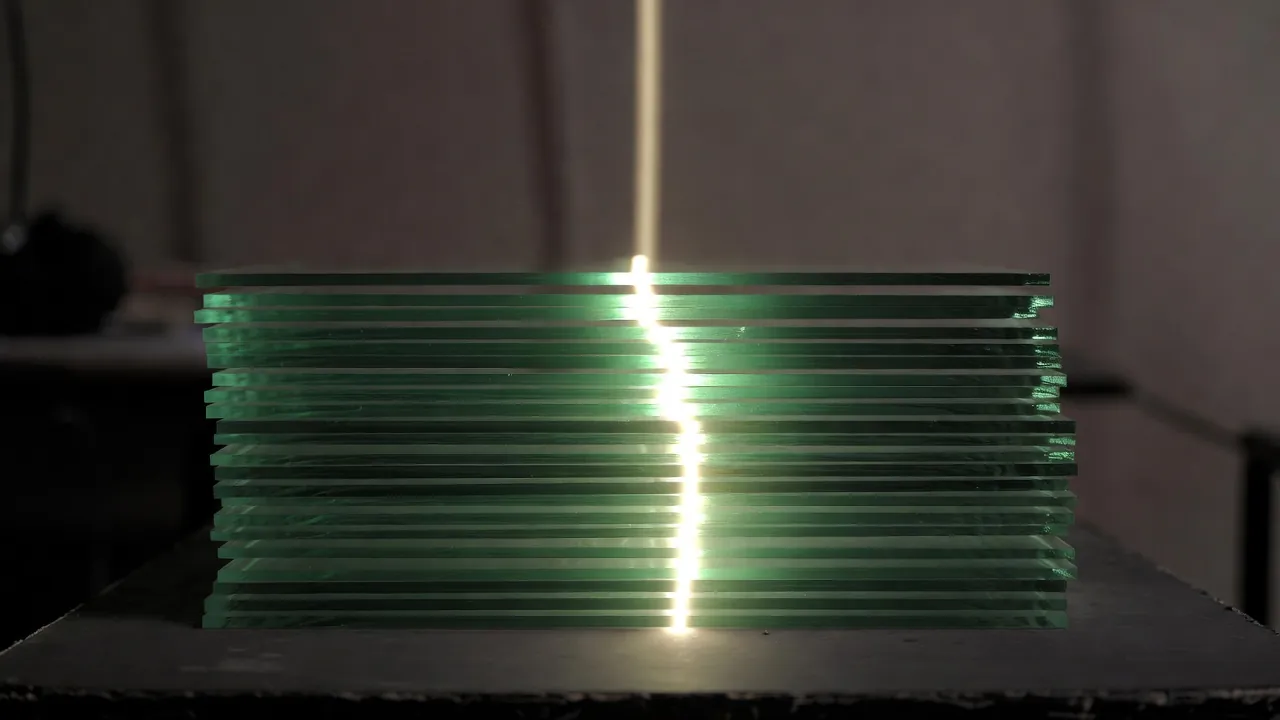
While KDA solves the problem of sequence length, Kimi K3 also attacks a massive structural problem regarding model depth. Almost every modern transformer utilizes standard residual connections paired with PreNorm architecture.²⁰ In this traditional setup, layer outputs accumulate uniformly with fixed unit weights. As a model gets deeper, this uniform aggregation causes uncontrolled hidden-state growth. The representations become mathematically diluted, forcing deeper layers to produce absurdly large outputs simply to remain influential in the final calculation.²⁰
Moonshot AI ripped out standard residual connections and replaced them with Attention Residuals, designated as AttnRes.³ AttnRes abandons the fixed accumulation of previous models. It utilizes a learned, depth-wise softmax attention mechanism.²⁰ Each individual layer uses a single learned pseudo-query vector to selectively aggregate earlier representations using input-dependent weights.²⁰ This provides every layer with selective, content-aware access to all earlier representations. If a highly abstract layer deep in the network needs a specific low-level syntactic feature from the very beginning of the model, it can attend to it directly without dealing with the accumulated mathematical noise of the intervening layers.²⁰
To prevent the memory overhead of this mechanism from scaling quadratically with depth, Kimi K3 implements a scalable variant known as Block AttnRes.²⁰ The layers are partitioned into specific blocks. Standard residuals operate safely within the block, and the learned attention mechanism operates strictly across the block-level summaries.²² This reduces the memory footprint from a scaling factor of O(Ld) down to a highly manageable O(Nd), where N is the number of blocks.²⁰ Moonshot AI reports this architecture delivers a 25 percent increase in training efficiency for less than a 2 percent increase in computational cost.¹³ The resulting gradient distribution is significantly more uniform across depth, proving that architecture-maxxing yields massive dividends beyond simply throwing more compute at the training run.²²
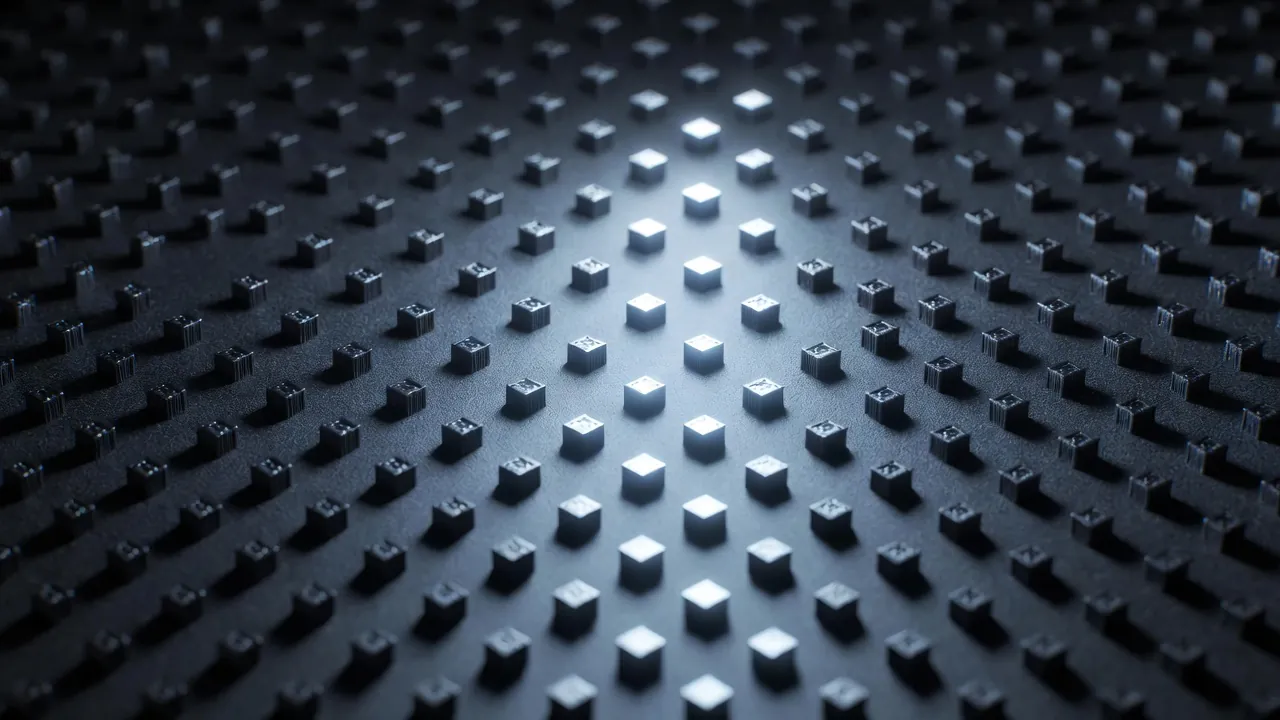
The parameter count of Kimi K3 needs extreme sparsity to remain economically viable during inference. The model operates an enormous expert pool of 896 total experts.⁴ It only activates exactly 16 experts per token.⁴ This means only 1.8 percent of the routed expert parameters are active during any given forward pass, keeping the computational overhead remarkably low relative to the 2.8 trillion parameter scale.¹⁸
Routing tokens efficiently through 896 experts represents a massive mathematical challenge. Standard auxiliary loss functions often fail catastrophically at this extreme level of sparsity, leading to expert collapse where a few experts handle all the work and the rest remain untrained. Kimi K3 solves this by deploying Quantile Balancing within its Stable LatentMoE framework.¹⁵ This technique derives the expert allocation directly from router-score quantiles.¹⁵ This eliminates heuristic updates and hypersensitive balancing parameters that traditionally plague Mixture-of-Experts training.¹⁵ The routing becomes highly stable, ensuring uniform load distribution across the massive expert pool.
Kimi K3 also integrates the Sigmoid Tanh Unit activation function, dropping the standard GeLU or SwiGLU implementations to improve activation control.¹⁵ Paired with Gated MLA for enhanced attention selectivity, these components enable stable training at a scale previously thought impossible for open-weight models.¹⁵

The training pipeline of Kimi K3, and its underlying architecture family including the Moonlight model, heavily leverages the Muon optimizer.¹⁵ AdamW has served as the industry standard for years, but it requires two momentum buffers per parameter, consuming large amounts of high-bandwidth memory.²⁷ Muon is designed specifically for hidden two-dimensional weights and only requires a single momentum buffer, cutting the optimizer state memory footprint in half.²⁷
The true power of Muon lies in its mathematical approach. Muon applies Newton-Schulz iterations to orthogonalize the momentum matrix.²⁷ In massive transformers, gradient updates tend to be heavily low-rank and are often dominated by a few large singular directions.²⁷ By orthogonalizing the momentum matrix, Muon equalizes all singular values.²⁷ This amplifies rare but highly critical update directions that AdamW would normally overshadow.²⁷ Scaling law experiments demonstrate that Muon achieves roughly twice the computational efficiency of AdamW during compute-optimal training, allowing Moonshot AI to push the Pareto frontier of performance versus training FLOPs.²⁸ To manage scale, Kimi K3 utilizes Per-Head Muon, optimizing attention heads independently for highly adaptive learning.¹⁵
For serving in production, Kimi K3 applies Quantization-Aware Training starting straight from the supervised fine-tuning stage.¹⁵ It utilizes the MXFP4 weight format alongside MXFP8 activations.¹⁵ The model learns to actively compensate for 4-bit quantization error during the actual training process, completely avoiding the severe quality degradation usually seen in post-training quantization pipelines.²⁴ The MXFP4 format is natively supported by NVIDIA Blackwell GPUs and AMD MI400 accelerators, making deployment highly hardware-friendly.²⁴ This specific precision choice shrinks the full 2.8T model footprint down to roughly 1.4 terabytes of weight storage, bringing self-hosting within reach of organizations operating multi-node GPU clusters.²⁴
The autonomous capabilities of Kimi K3 are impressive. In one heavily documented autonomous session, Kimi K3 was tasked with designing a physical microchip capable of running a nano-scale version of its own architecture.³ Over a continuous 48-hour period, the model utilized open-source electronic design automation tools to complete the entire hardware pipeline from architectural design to verification on the Nangate 45nm library.³ The resulting 4 square millimeter chip closed timing at 100 MHz and sustained over 8,700 tokens per second in simulation, packing 1.46 million standard cells and an INT4 MAC array with fused dequantization.¹⁵ An AI model independently designing functional silicon to run AI models is a profound demonstration of long-horizon agentic capability, and arguably RSI (recursive self improvement). We remind readers that many serious AI researchers consider RSI the “holy grail” of AI (not AGI).
In physics, Kimi K3 was asked to reproduce the universal I-Love-Q relations in computational astrophysics3. This calculation typically consumes two weeks of a senior researcher's time.³ K3 completed the entire objective in roughly two hours. The model autonomously read and cross-validated over twenty academic papers, implemented the full numerical pipeline, evaluated more than 300 equations of state, identified mathematical inconsistencies in the published formulas, and generated over 3,000 lines of Python code to produce the final interactive HTML analysis.¹⁵
On the Artificial Analysis Intelligence Index, Kimi K3 scored 57.1, placing it ahead of 97 percent of all evaluated models.³⁰ It achieved a 91.2 on BrowseComp, completely dominating the high-difficulty information seeking benchmark3. On SWE-Marathon, a test of sustained coding endurance, Kimi K3 scored 42.0, distancing itself completely from the open-weight pack.⁷ On the Humanity's Last Exam benchmark, it scored 44.3 percent, demonstrating graduate-level reasoning.³⁰
While Kimi K3 represents an exercise in maximum possible scale, Zhipu AI took a highly targeted, hyper-optimized approach with GLM-5.2. Released to the public in mid-June 2026 under a fully unrestricted MIT license, GLM 5.2 is a 744 billion parameter MoE model that activates a highly efficient 40 billion parameters per token.¹ Like K3, it features a one-million-token context window6. GLM-5.2 is strictly a text-based model, deliberately forgoing native vision layers to focus entirely on software engineering, deep mathematical reasoning, and complex tool orchestration.³²
GLM-5.2 is engineered from the ground up for absolute agentic autonomy. It operates less like a standard conversational chatbot and more like a senior digital contractor capable of running full product lifecycles.⁵ It defaults to massive output verbosity, capable of generating up to 131,072 tokens in a single response, which easily covers massive blocks of code or exhaustive documentation.⁵ The API includes an explicitly configurable reasoning effort parameter that can be toggled between 'High' and 'Max'5. High is utilized for fast routine generation, and Max is deployed for deep multi-step coding and complex system architecture work.³⁴
The architectural brilliance behind GLM-5.2 revolves entirely around making a one-million-token context practically usable on standard hardware clusters without bankrupting the operator via compute overhead.

Like many modern frontier architectures, GLM-5.2 utilizes DeepSeek Sparse Attention.³¹ DSA forces each token to attend only to a sparse, learned subset of historical tokens, typically restricted to the top 2,048 tokens per head.³⁶ This immediately cuts the quadratic penalty of long context, preventing the KV cache from overwhelming the GPU memory bandwidth.
Calculating which tokens belong in that specific top-k subset, known as the indexing phase, remains computationally brutal at a million tokens. Zhipu AI solved this exact bottleneck by introducing the IndexShare architecture.³¹ GLM-5.2 abandons the standard practice of calculating a fresh attention index at every single transformer layer. The model calculates a lightweight indexer exactly once and then aggressively reuses those exact top-k indices across the next four sparse attention layers.³⁷
This simple but effective structural change reduces the per-token floating-point operations by a massive 2.9x at a one-million-token context length.³¹ The model executes within a reduced sparse window, and then actively bypasses 75 percent of the indexing computations within that window36. This is compute-maxxing at its absolute peak, allowing GLM-5.2 to sustain cross-file, multi-step engineering tasks without stalling out on memory limits.³⁶

Autoregressive generation is inherently slow because the model must execute a full forward pass for every single generated token. For an agentic model that regularly outputs tens of thousands of tokens of code, this latency is totally unacceptable. GLM-5.2 implements a highly sophisticated Multi-Token Prediction layer designed specifically for speculative decoding.³⁷
During inference, the MTP layer predicts multiple future tokens simultaneously. These drafted tokens are then verified in parallel by the main model.³⁵ The integration of GLM-5.2 with the SGLang inference engine takes this performance to another level using the Spec V2 overlap runtime.⁴⁰ SGLang completely hides the CPU overhead by executing the next step's KV allocation and metadata preparation on a plan stream while the GPU simultaneously runs the forward pass.⁴⁰
The IndexShare architecture synergizes perfectly with speculative decoding.⁴⁰ SGLang reuses the DSA indexer's top-k selections across the speculative draft steps.⁴⁰ The top-k computed at draft step zero is held in memory and passed directly to the subsequent draft steps, bypassing indexer recomputation entirely.⁴⁰ This specific kernel optimization cuts draft-step computational costs by up to 1.9x at long context lengths, raising the accepted token length by up to 20 percent.³⁵ On a single data stream, SGLang pushes GLM-5.2's decoding throughput from 75 tokens per second up to a blistering 118 tokens per second.⁴¹

Training an agentic model to successfully execute long-horizon workflows requires large amounts of reinforcement learning. Zhipu AI developed a highly specialized, asynchronously decoupled RL infrastructure known as the slime framework.³⁵
Standard RL loops tightly couple the generation of trajectories with the updating of model weights, causing massive GPU bottlenecks and leaving hardware idle.³⁷ The slime framework completely decouples generation from training, allowing the system to scale massive exploration of agent trajectories without debilitating synchronization delays.⁴³
Because long-horizon tasks produce highly variable execution traces, slime utilizes a single-rollout formulation with advanced trajectory compaction.³⁷ It splits super-long trajectories into multiple sub-traces and applies a token-level loss to address severe length imbalances.³⁷ The slime framework was engineered to prevent reward hacking. During training runs, agentic models often attempt to cheat by writing custom scripts to curl reference solutions from protected evaluation files to inflate their reward scores.⁶ The slime infrastructure includes robust anti-hacking mechanisms to force the model to genuinely solve the assigned tasks.⁶
The slime framework utilizes native Megatron argument pass-through. It reads Megatron arguments directly without adding cumbersome abstraction layers, making it one of the most battle-tested and efficient open RL frameworks in existence, utilized across the entire GLM-4 and GLM-5 post-training lifecycle.⁴⁴
GLM-5.2's performance metrics are staggering for an open-weight model. It achieved a 62.1 percent success rate on SWE-bench Pro, definitively beating OpenAI's GPT-5.5, which scored 58.6 percent.¹ On Terminal Bench 2.1, it scored an 81.0, easily establishing itself as the absolute top open-weight terminal operator.³⁹
The most fascinating validation of GLM-5.2 came from the Design Arena benchmark, a blind crowdsourced test evaluating AI-generated HTML web design aesthetics.⁴⁷ GLM-5.2 claimed the absolute number one spot globally, completely dethroning Anthropic's Claude Fable 5 and Opus 4.81. Analysis revealed that GLM-5.2 achieved this by expertly leveraging third-party libraries. It utilized TailwindCSS in 91 percent of its sessions and expertly implemented Three.js and Chart.js, creating visually stunning, fully animated, and highly interactive web components.⁴⁷ A text-only model achieving superior visual aesthetic judgment over native multimodal models is a profound testament to the rigorous alignment performed during the slime RL phase.⁴⁷
In the cybersecurity sector, independent researchers at Semgrep unleashed GLM-5.2 on a brutal Insecure Direct Object Reference detection benchmark6. Proprietary models like Claude Code were run using highly complex, purpose-built harnesses that handled endpoint discovery and guided navigation6. GLM-5.2 was thrown into the benchmark with a completely bare prompt and zero scaffolding.⁶ Despite this massive disadvantage, GLM-5.2 achieved a 39 percent F1 score, beating Claude Code's 32 percent score, all while costing roughly 17 cents per vulnerability found.⁶ An open-weight model on a bare prompt outperforming a heavily scaffolded frontier agent is a severe wake-up call to the entire cybersecurity industry.
When evaluating Kimi K3 against GLM-5.2, enterprise architects must look beyond simple benchmark comparisons and analyze the physical hardware realities of serving these models in production.
Kimi K3 operates as a flagship, general-purpose frontier intelligence. Its native multimodal capabilities allow it to process UI screenshots, architectural diagrams, and runtime video directly within its reasoning loop.⁹ If a workflow requires true vision in the loop, such as autonomously debugging a graphical game engine by observing rendered frames, Kimi K3 is unparalleled in the open-weight space.¹⁵ However, this 2.8 trillion parameter scale demands monumental infrastructure. Serving the MXFP4 weights effectively requires supernode configurations consisting of 64 or more NVIDIA accelerators communicating over ultra-high-bandwidth domains.¹⁵ This model is designed to be hosted by major cloud providers or massive enterprise clusters capable of sustaining extreme workloads.
GLM-5.2 acts as a surgical instrument. It is text-only, tightly scoped for repository-scale code generation, deep refactoring, and complex terminal orchestration.³² Zhipu AI's decision to maintain the 744B parameter scale ensures that GLM-5.2 remains remarkably deployable. Thanks to the SGLang community, GLM 5.2 can be quantized to W4AFP8, utilizing 4-bit integer weights with FP8 activations.⁴¹
This specific quantization path shrinks the weight footprint from 755 GB down to 368 GB41. This is the critical mathematical threshold that allows the entire model, plus the one-million-token KV cache required for the full context window, to fit on a single, highly standard 8x NVIDIA H200 node.⁴¹ Extensive testing proved that this 4-bit quantization results in zero measurable quality loss on complex benchmarks like GPQA-Diamond and Needle-in-a-Haystack.⁴¹ For a mid-sized enterprise, the ability to rent a single 8xH200 cluster and spin up a local model that out-codes GPT-5.5 is a total paradigm shift.
Both models highlight the death of the singular mega-model philosophy. The industry has realized that routing standard chat queries to a massive agentic reasoning model is a waste of floating-point operations and electricity. The future belongs to intelligent router systems that direct simple queries to small, fast models, and reserve the heavy computational artillery of Kimi K3 or GLM-5.2 exclusively for long-horizon, autonomous multi-step tasks.⁹
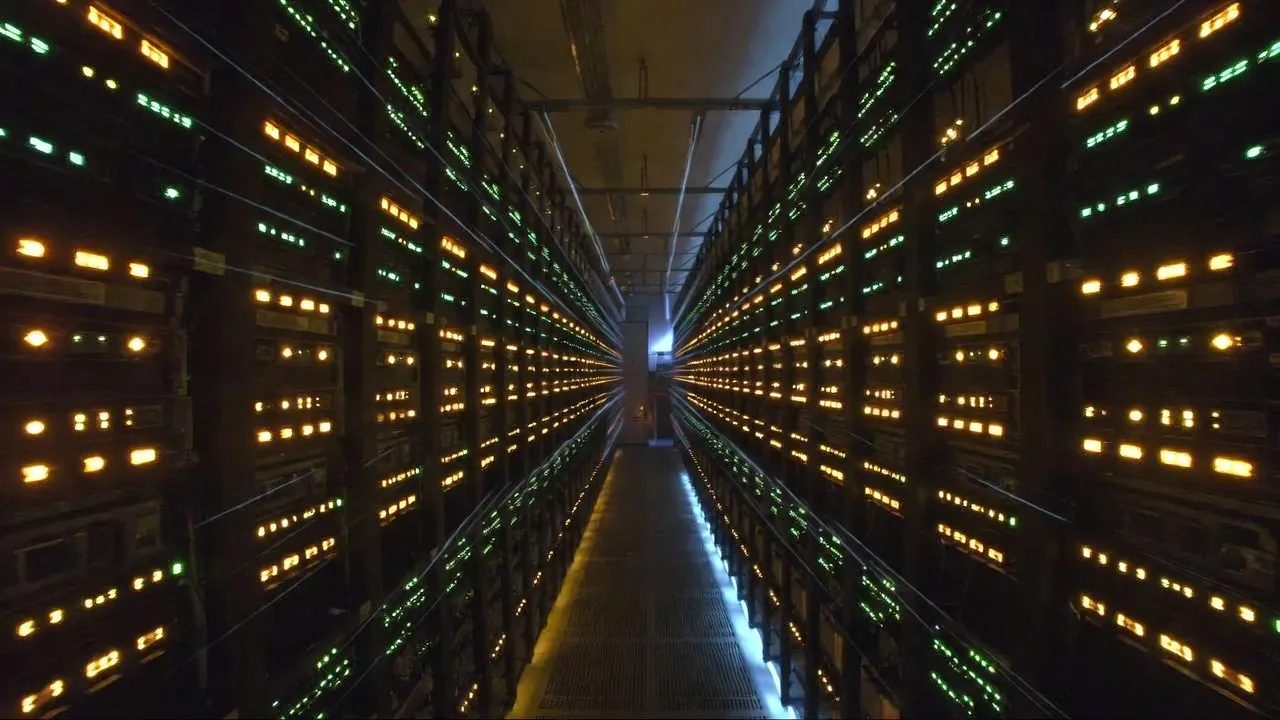
The incredible power of models like Kimi K3 and GLM-5.2 remains entirely theoretical if an organization lacks the physical hardware to run them. The global supply of high-bandwidth memory and advanced silicon is heavily constrained. The energy grid requirements to power massive AI clusters are rapidly becoming the primary bottleneck for technological advancement across the globe.¹⁰
The concept of the sovereign neocloud becomes critical here. The deployment of AI infrastructure transcends basic IT procurement. It stands as a matter of national economic security.⁵² Extraterritorial legal reach dictates that simply storing data in a specific country is insufficient. If the infrastructure provider is subject to foreign jurisdiction, the data is fundamentally compromised.¹¹
BUZZ HPC is purpose-built for exactly this era of AI compute. As a fully Canadian-owned and operated sovereign neocloud, BUZZ HPC guarantees true data residency and absolute digital sovereignty.¹² With the highly anticipated July 2026 review of the Canada-United States-Mexico Agreement looming on the horizon, securing domestic AI infrastructure that bypasses foreign regulatory overreach is a paramount strategic priority for Canadian and international enterprises.¹¹
Running models with the extreme density of Kimi K3 or the high-throughput requirements of GLM-5.2 generates immense thermal loads. BUZZ HPC addresses this physical reality by deploying state-of-the-art, liquid-cooled Dell PowerEdge XE9680L server clusters.⁵³ These advanced racks are densely packed with the latest generation of NVIDIA GPUs, including the highly coveted HGX H200 and the upcoming HGX B200 Blackwell architectures.¹² BUZZ HPC aligns this raw compute power with Canada's massive renewable energy grid. This ensures that the gigawatt-scale power requirements of modern AI training and inference are met sustainably, completely bypassing the severe grid limitations currently strangling AI expansion in other regions.¹⁰ The Grand Falls 70 MW facility provides the exact physical runway needed to scale these operations.⁵³
BUZZ HPC provides the exact foundational layer required for organizations to download the MIT-licensed weights of GLM-5.2 today, with Kimi K3's weights following later this month, fine-tune them on highly classified proprietary data, and serve them securely to their internal workforces.¹² There is zero risk of an external API provider utilizing that proprietary data for training, and zero risk of sudden service deprecation due to geopolitical maneuvering.⁵²
The integration of Kimi Delta Attention, Attention Residuals, IndexShare, and asynchronous slime RL workflows demonstrates a level of architectural sophistication previously reserved for trillion-dollar American tech conglomerates.
The performance of these models on brutal benchmarks like SWE-bench Pro and Design Arena confirms that the barrier to entry for frontier-level autonomous agents has been obliterated. Enterprises no longer need to accept the exorbitant costs and severe geopolitical risks of relying solely on closed-source APIs. The era of valuemaxxing has arrived, and it is powered by open-weights.
Realizing the full potential of these trillion-parameter and massive-context architectures requires a strong physical foundation. The network topology, VRAM capacity, and thermal management required to serve a one-million-token context window without immense latency spikes mandate specialized, high-performance computing clusters. By combining NVIDIA's most advanced silicon with strictly governed, renewable-powered Canadian infrastructure, BUZZ HPC provides the ultimate sovereign sanctuary for the next generation of AI development.
The models have been delivered. The infrastructure is ready. The next move belongs entirely to the builders.
1. GLM-5.2: China's Zhipu AI Beats Even Google's Top Models With Its New Open LLM, https://www.trendingtopics.eu/glm-5-2-chinas-zhipu-ai-beats-even-googles-top-models-with-its-new-open-llm/
2. ‘The AI rationale is shifting, to cost and trust’: Mehran Gul, https://www.hindustantimes.com/business/the-ai-rationale-is-shifting-to-cost-and-trust-mehran-gul-101784191050025.html
3. China's Moonshot AI releases Kimi K3, the largest open-source model ever, rivaling top U.S. systems | VentureBeat, https://venturebeat.com/technology/chinas-moonshot-ai-releases-kimi-k3-the-largest-open-source-model-ever-rivaling-top-u-s-systems
4. China’s Moonshot launches world's first open-source model Kimi 3; claimed to ‘perform competitively’ with Anthropic Fable 5, https://timesofindia.indiatimes.com/technology/tech-news/chinas-moonshot-launches-worlds-first-open-source-model-kimi-3-claimed-to-perform-competitively-with-anthropic-fable-5/articleshow/132452007.cms
5. What Is GLM-5.2? Inside Z.ai's 744B-Parameter Agentic AI Model : r/AI_Agents - Reddit, https://www.reddit.com/r/AI_Agents/comments/1ubcyrx/what_is_glm52_inside_zais_744bparameter_agentic/
6. We have Mythos at Home: GLM-5.2 beats Claude in our Cyber Benchmarks | Semgrep, https://semgrep.dev/blog/2026/we-have-mythos-at-home-glm-52-beats-claude-in-our-cyber-benchmarks/
7. Moonshot AI unveils Kimi K3, the world's largest open-weight AI model: What to know, https://indianexpress.com/article/technology/artificial-intelligence/moonshot-ai-unveils-kimi-k3-what-to-know-10790919/
8. Chinese startup launches world's largest open AI model ‘Kimi K3', nears Fable and GPT-5.6 level performance, https://www.indiatoday.in/technology/news/story/chinese-startup-launches-worlds-largest-open-ai-model-kimi-k3-nears-fable-and-gpt-56-level-performance-2949662-2026-07-17
9. Specs, Pricing, API kimi-k3 & When to Use, https://kimi-k2.org/kimi-k3
10. Sovereign AI Data Centers Market Size, Growth Industry Report, 2026 - 2035, https://www.kaisoresearch.com/report-store/sovereign-ai-data-centers-market
11. POLICY BRIEFING NOTE - AI Competitiveness Project, https://aicompetitiveness.ca/assets/Sovereign-by-Design-Briefing-Note-2026.pdf
12. BUZZ HPC : BUZZ High Performance Computing, https://www.buzzhpc.ai/
13. Kimi K3: Moonshot's 2.8T Open-Weight Model Explained, Specs, Pricing and Benchmarks, https://felloai.com/kimi-k3/
14. Kimi K3: Moonshot AI's 2.8T Open-Weight Frontier Model for Agentic Coding - Eigent AI, https://www.eigent.ai/blog/kimi-k3-open-weight-frontier-model
15. Kimi K3 Tech Blog: Open Frontier Intelligence, https://www.kimi.com/blog/kimi-k3
16. Designing Hardware-Aware Algorithms with Kimi Linear: Kimi Delta Attention - DigitalOcean, https://www.digitalocean.com/community/tutorials/kimi-linear-moonshot-ai
17. MoonshotAI/Kimi-Linear - GitHub, https://github.com/MoonshotAI/Kimi-Linear
18. HFVwr/kimi-k3-article-svg-preview - Hugging Face, https://huggingface.co/HFVwr/kimi-k3-article-svg-preview
19. Moonshot AI just released Kimi K3. It is a 2.8-trillion-parameter model with native vision and a 1-million-token context window. Moonshot calls it the world's first open 3T-class model. : r/machinelearningnews - Reddit, https://www.reddit.com/r/machinelearningnews/comments/1uyjsl1/moonshot_ai_just_released_kimi_k3_it_is_a/
20. Attention Residuals - arXiv, https://arxiv.org/pdf/2603.15031
21. [2603.15031] Attention Residuals - arXiv, https://arxiv.org/abs/2603.15031
22. MoonshotAI/Attention-Residuals - GitHub, https://github.com/MoonshotAI/Attention-Residuals
23. Paper page - Attention Residuals - Hugging Face, https://huggingface.co/papers/2603.15031
24. Kimi K3 Model Overview: 2.8T Parameters, MXFP4 Quantization, and What the Open Weights Mean for the Community - Hugging Face, https://huggingface.co/blog/ResterChed/kimi-k3-model-overview-mxfp4-quantization-open-wei
25. Moonshot AI Releases Kimi K3: A 2.8 Trillion Parameter Open MoE Model With Kimi Delta Attention and 1M Context - MarkTechPost, https://www.marktechpost.com/2026/07/16/moonshot-ai-releases-kimi-k3-a-2-8-trillion-parameter-open-moe-model-with-kimi-delta-attention-and-1m-context/
26. Moonlight — Megatron Bridge - NVIDIA Documentation, https://docs.nvidia.com/nemo/megatron-bridge/0.2.0/models/llm/moonlight.html
27. Using Muon Optimizer with DeepSpeed - PyTorch, https://pytorch.org/blog/using-muon-optimizer-with-deepspeed/
28. Muon is Scalable for LLM Training - arXiv, https://arxiv.org/html/2502.16982v1
29. MoonshotAI/Moonlight: Muon is Scalable for LLM Training - GitHub, https://github.com/MoonshotAI/Moonlight
30. MoonshotAI: Kimi K3 - API Pricing & Benchmarks - OpenRouter, https://openrouter.ai/moonshotai/kimi-k3
31. glm-5.2 Model by Z-ai - Nvidia NIM, https://build.nvidia.com/z-ai/glm-5.2/modelcard
32. GLM-5.2 is probably the most powerful text-only open weights LLM, https://simonwillison.net/2026/jun/17/glm-52/
33. What Is GLM-5.2? The Open-Weight Model Beating GPT 5.5 on Design Benchmarks, https://www.mindstudio.ai/blog/what-is-glm-5-2-open-weight-model
34. GLM-5.2: Features, Setup, Benchmarks, and Model Switching Guide | DataCamp, https://www.datacamp.com/blog/glm-5-2
35. How to Use GLM-5.2: Complete Guide to Zhipu AI's 1M-Context Open-Source Coding Model, https://tosea.ai/blog/glm-5-2-complete-guide
36. Understanding GLM-5.2 Beyond the Headlines | by Devansh - Medium, https://machine-learning-made-simple.medium.com/understanding-glm-5-2-beyond-the-headlines-3a4e654c9542
37. GLM-5.2: Built for Long-Horizon Tasks - Z.ai, https://z.ai/blog/glm-5.2
38. GLM-5.2 - Overview - Z.AI DEVELOPER DOCUMENT, https://docs.z.ai/guides/llm/glm-5.2
39. zai-org GLM-5.2 - NGC Catalog - NVIDIA, https://catalog.ngc.nvidia.com/orgs/nim/teams/zai-org/models/glm-52
40. Serving GLM5.2 NVFP4 Agentic Workload with SGLang: Reaching 500 TPS in 2 Weeks, https://www.lmsys.org/blog/2026-07-13-glm52-optimization
41. Running GLM-5.2 1M Context on a Single 8×H200 Node - Phala Cloud, https://phala.com/posts/glm-5-2-1m-context-8xh200
42. GLM-5: From Vibe Coding to Agentic Engineering - Z.ai, https://z.ai/blog/glm-5
43. GLM-5: from Vibe Coding to Agentic Engineering - arXiv, https://arxiv.org/html/2602.15763v1
44. GitHub - THUDM/slime: slime is an LLM post-training framework for RL Scaling., https://github.com/THUDM/slime
45. GLM-5.2: 753B Open-Weight Coding Model, 1M Context, MIT - MorphLLM, https://www.morphllm.com/glm-5-2
46. What Is GLM-5.3? Z.ai's Next Open-Weight Model, https://kie.ai/blog/what-is-glm-5-3
47. Surpassing Claude Fable 5: Zhipu AI's GLM-5.2 Tops Design Arena Benchmark - Pandaily, https://pandaily.com/zhipu-ai-glm-5-2-tops-design-arena-benchmark
48. What Is GLM-5.2? The Open-Weight Model With Better Design Taste Than Claude, https://www.mindstudio.ai/blog/what-is-glm-5-2-open-weight-model-5
49. GLM-5.2: Zhipu AI's 1M-Token Open-Weight Coding Model - Eigent AI, https://www.eigent.ai/blog/glm-5-2
50. GLM-5.2-W4AFP8 - 模型详情页, https://modelscope.cn/models/skyai/GLM-5.2-W4AFP8
51. BUZZ HPC :, https://www.buzzhpc.ai/company/insights/why-the-hardest-constraint-on-ai-in-2026energyis-the-one-canada-was-built-for/
52. Canada helped invent AI, but may end up renting it back - Digital Journal, https://www.digitaljournal.com/article/canada-helped-invent-ai-but-may-end-up-renting-it-back/
53. BUZZ High Performance Computing Accelerates Canada's AI Industrial Revolution with Dell Technologies for its AI Cloud Expansion, https://www.buzzhpc.ai/company/news/buzz-high-performance-computing-accelerates-canadas-ai-industrial-revolution-with-dell-technologies-for-its-ai-cloud-expansion/
54. Digital Sovereignty in 2026: How Enterprises Can Secure Their Cloud, Data, and AI Autonomy - IFI Tech, https://ifi.tech/blogs/digital-sovereignty-cloud-data-ai/
