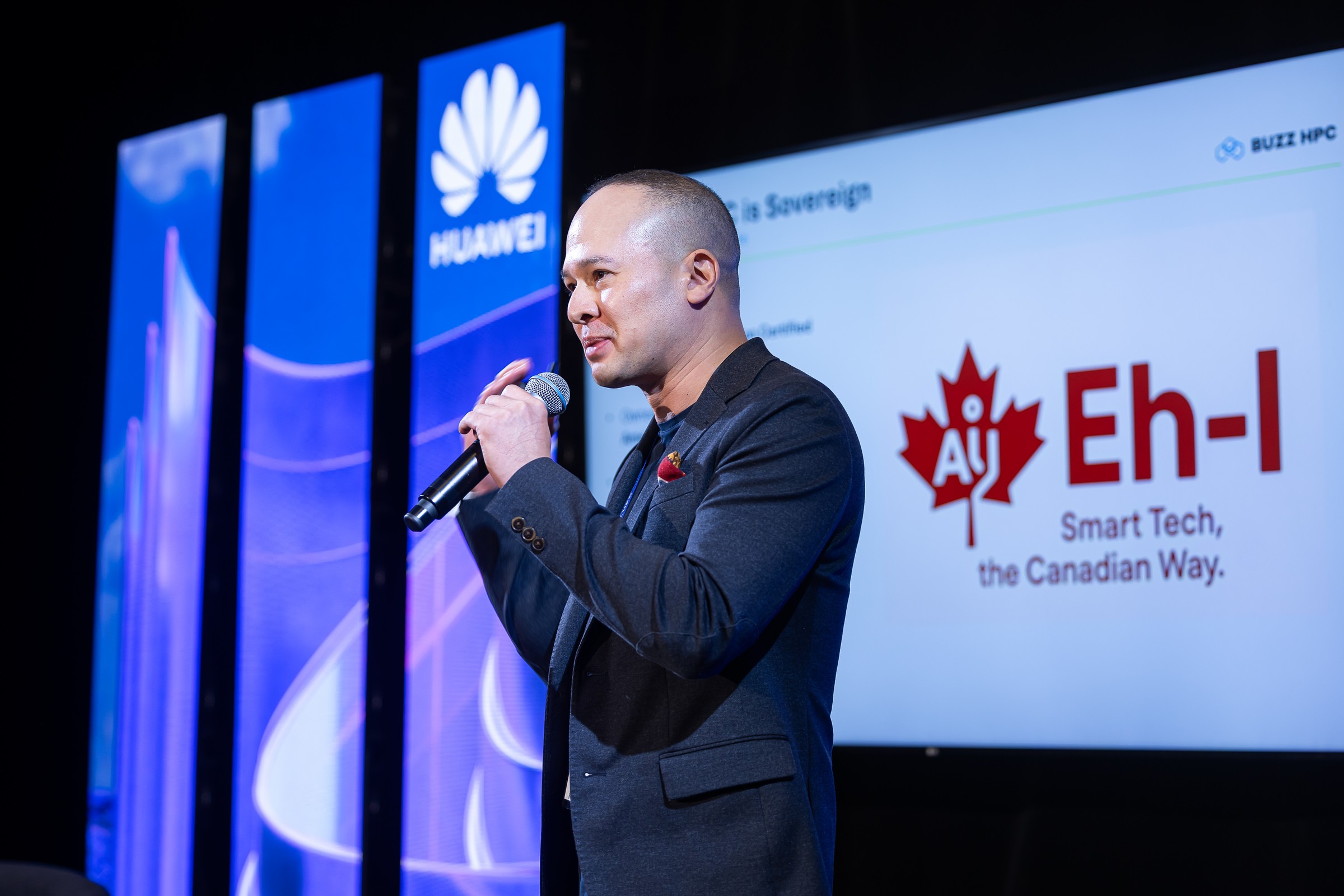
The BUZZ HPC team just wrapped up an incredible week at NVIDIA GTC 2026 in San Jose.
Here's what stood out:
GTC 2026 was a declaration that AI has moved from experimentation into full industrial deployment.
Jensen Huang's keynote kept returning to one concept: the AI factory. Not a server. Not a GPU. A fully integrated system of compute, networking, software, storage, and system design working as one platform.
That framing matters. Here's why.
1. NVIDIA is now an infrastructure company.
The messaging has shifted. NVIDIA is no longer presenting itself as a chipmaker that sells into AI. It's positioning as the architecture layer for the entire AI economy. Every announcement reinforced that: tightly integrated systems designed to run AI at industrial scale.
2. Vera Rubin is the next platform.
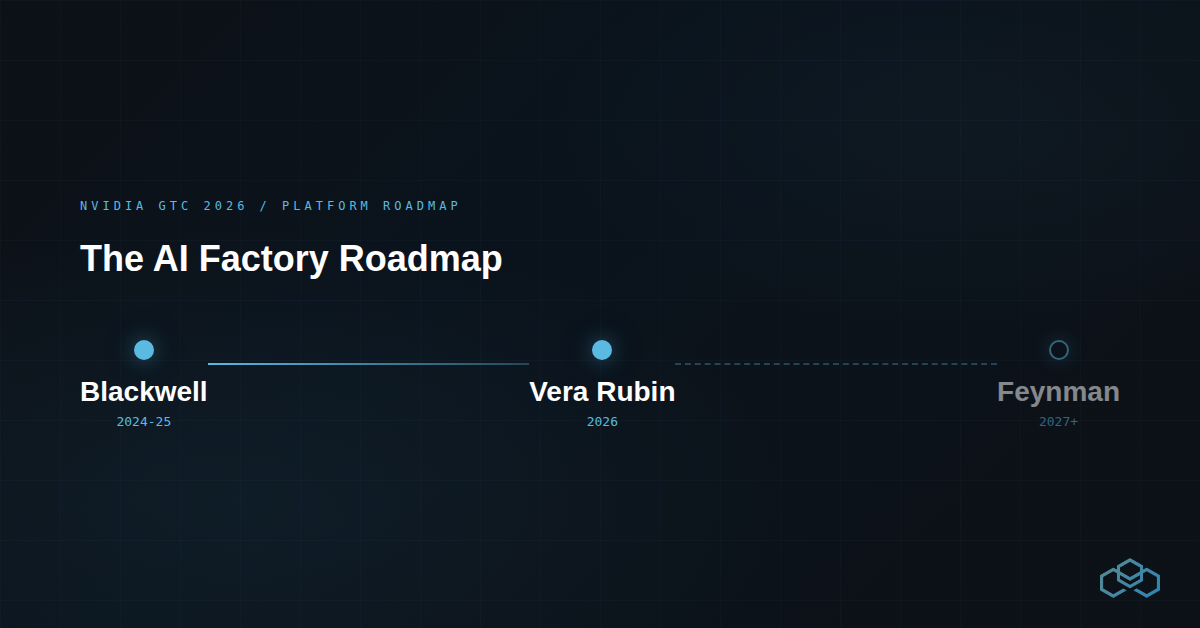
The biggest hardware reveal was Vera Rubin, the successor architecture to Blackwell. It includes the Vera CPU, rack-scale designs, and the surrounding infrastructure required for next-generation workloads. Jensen also previewed Feynman further down the roadmap, giving customers a multiyear planning path for infrastructure buildouts.
3. Inference is now the main event.
This was the most important business signal at GTC. The industry is moving from training frontier models to running them continuously in production. NVIDIA raised its projected revenue opportunity for Blackwell and Rubin AI systems to at least $1 trillion through 2027. Inference is no longer one monolithic workload either. NVIDIA is optimizing different parts of the pipeline, including prefill and decode, with different system components.
.png)
4. Agentic AI is the next demand wave.
AI is moving beyond chat into autonomous and semi-autonomous software agents that can reason, take actions, and use tools. NVIDIA's announcements around OpenClaw, NemoClaw, and related tooling signal that the next wave of enterprise demand will require a full software and governance layer. The shift from AI "thinking" to AI "doing" needs infrastructure built for it.
5. The platform extends well beyond LLMs.
NVIDIA is standardizing its infrastructure stack across open models, physical AI, robotics, and domain-specific AI systems. That expands the addressable market from model training clusters to nearly every compute-intensive AI workload. The platform play is vertical-agnostic by design.
6. Physical AI is a major growth frontier.
GTC connected AI infrastructure directly to robotics, autonomous machines, and real-world industrial systems. The next phase of AI demand won't stay confined to digital copilots. It will move into machines, factories, vehicles, and industrial environments. This was one of the three major frontiers NVIDIA highlighted alongside agentic AI and inference.
7. Sovereign AI is strategically critical.
GTC 2026 had an entire sovereign AI track. The rise of sovereign AI is prompting nations, governments, telecoms, and enterprises to build domestic AI factories. NVIDIA defines sovereign AI as a nation's ability to build AI using its own infrastructure, data, workforce, and business networks. Countries and regulated enterprises increasingly want data residency, legal control, operational resilience, and domestic economic value rather than dependence on foreign hyperscale infrastructure for mission-critical AI.
.png)
What this means for BUZZ HPC
Jensen's keynote validated the thesis we've been building toward.
The industry is moving away from buying isolated GPUs and toward building integrated AI factories. The demand center is shifting to large-scale inference, which favors operators that can deliver dense, production-grade, highly available infrastructure. And the sovereign AI track reinforces that nations and enterprises want domestic, compliant, strategically controlled compute capacity.
That's exactly the value proposition BUZZ HPC is building: sovereign AI infrastructure with global-grade architecture, purpose-built for long-term inference, enterprise AI, and national-scale resiliency.
GTC 2026 made one thing clear.
The AI factory era is here.
And the operators who build for it now will define the next decade of AI infrastructure.